
Best Time for Phi Phi Island Tours: Complete Monthly Guide
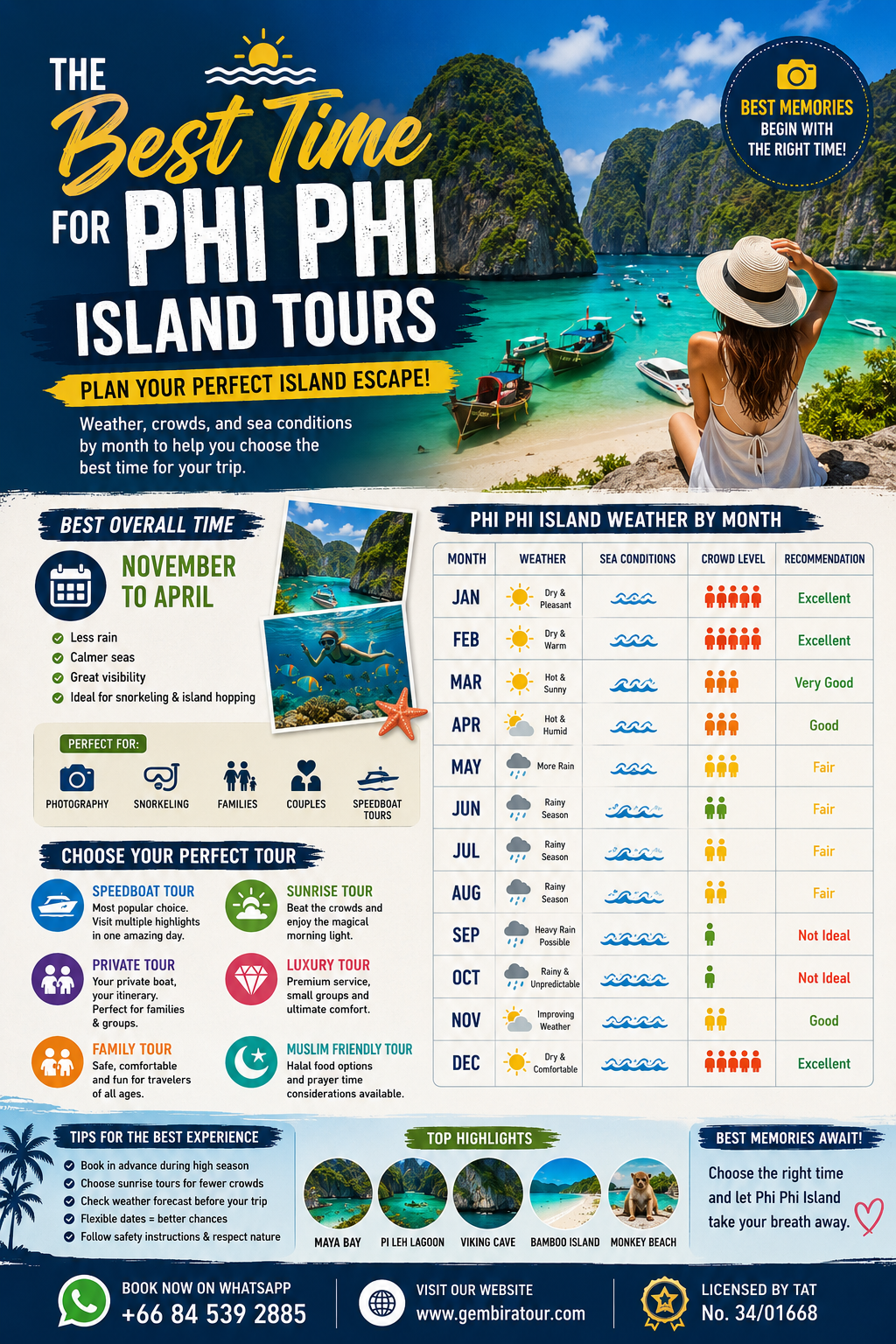
The best time for Phi Phi Island tours is generally between November and April, when the Andaman coast usually experiences less rainfall, more comfortable weather and a greater chance of suitable sea conditions.
However, choosing the right month involves more than looking for sunshine. Travelers should also consider sea conditions, crowds, prices, heat, visibility, seasonal regulations and the type of Phi Phi tour they want to book.
This guide explains the Phi Phi Island weather by month, compares the high, shoulder and rainy seasons, and helps you choose the most suitable time for a tour from Phuket or Krabi.
What Is the Best Time for Phi Phi Island Tours?
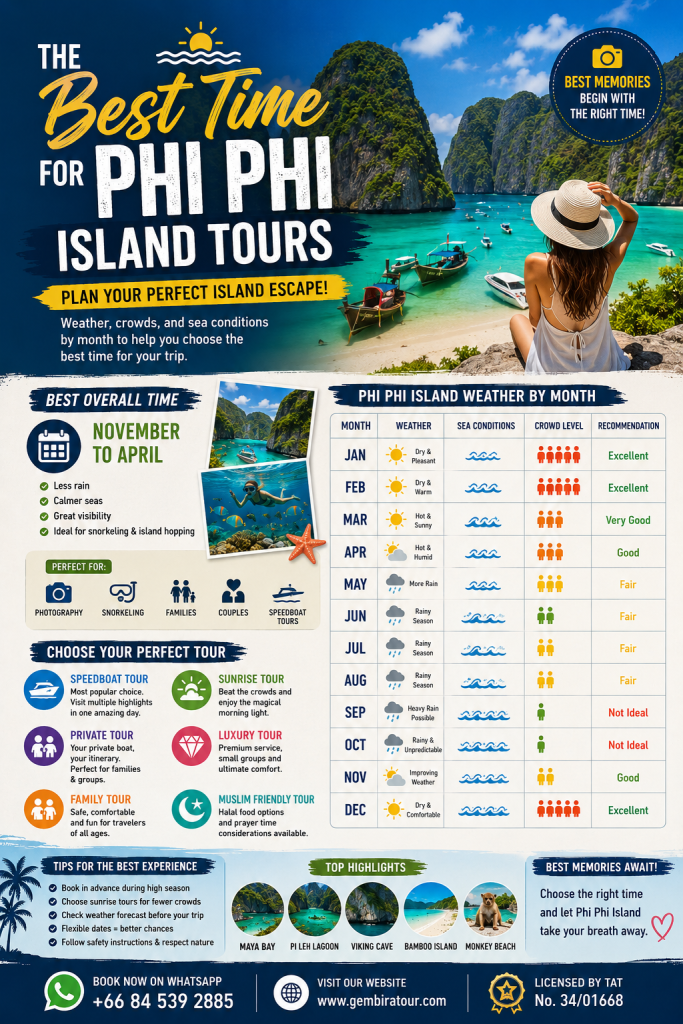
For most travelers, the best period for a Phi Phi Island day tour is from November to April. Rain is generally less frequent during this period, and tour operations usually have a better chance of experiencing favorable conditions.
December to February is especially popular because the weather is often more comfortable. However, these months are also part of the busiest tourism period, particularly around Christmas, New Year and major holidays.
Travelers seeking a balance between generally favorable weather and slightly lower visitor numbers may consider November, early December, late February or March.
These are general seasonal patterns rather than guarantees. Weather and sea conditions can change quickly, even during the traditionally drier months.
Understanding the Phi Phi Island Seasons
Dry and High Season: November to April
November to April is generally considered the most suitable period for visiting Phi Phi Island. Rainfall is usually less frequent than during the southwest monsoon, and travelers often have a better chance of enjoying blue skies and calmer-looking water.
It is also the most popular period for speedboat tours, snorkeling trips, private charters and sunrise excursions. Demand can be high, especially between late December and February.
Main advantages:
- Lower probability of prolonged rainfall
- Better chance of suitable boating conditions
- More comfortable weather during December and January
- Good availability of different tour types
- Popular period for beach and snorkeling activities
Main disadvantages:
- Higher visitor numbers at major attractions
- Popular tours may sell out
- Hotels and private tours may cost more
- Busy piers and hotel pickup services
Hot and Transitional Period: March to May
March and April can still provide favorable touring conditions, but temperatures and humidity tend to rise. The sun can feel intense during beach stops, pier check-in and open-boat travel.
May is more transitional. Some days may remain sunny, while others can bring heavier showers, stronger wind or changing sea conditions.
Travelers visiting during this period should carry strong sun protection, drink sufficient water and prepare for possible itinerary changes.
Rainy or Southwest Monsoon Season: May to October
The rainy season does not necessarily mean continuous rain every day. Some days may include sunshine, short showers and long periods of acceptable weather.
Nevertheless, this season brings a higher probability of strong wind, waves, heavy rainfall and tour cancellations. September and October are often among the months requiring the greatest flexibility.
The main advantage is that destinations and accommodation may be less crowded. The main risk is that travelers cannot rely on a fixed island itinerary when marine conditions are unfavorable.
Phi Phi Island Weather by Month
| Month | General Conditions | Crowd Level | Tour Recommendation |
|---|---|---|---|
| January | Generally drier and relatively comfortable | Very high | Excellent weather potential, but book early |
| February | Often dry with warm temperatures | High | One of the best overall months |
| March | Hotter with generally favorable touring potential | Moderate to high | Good option with strong sun protection |
| April | Hot, humid and increasingly changeable | High around holidays | Travel early and prepare for heat |
| May | Transitional with increasing rainfall | Lower | Possible, but maintain flexibility |
| June | Mixed sunshine, showers and possible waves | Low to moderate | Book with a clear weather policy |
| July | Variable weather with periodic rain | Moderate during holidays | Check marine conditions carefully |
| August | Unpredictable rain and sea conditions | Moderate | Allow alternative travel dates |
| September | Higher likelihood of rain and rough seas | Low | Best for flexible travelers only |
| October | Transitional and still potentially unsettled | Low to moderate | Conditions may improve later in the month |
| November | Weather generally begins improving | Moderate | Good balance before peak crowds |
| December | Generally favorable and more comfortable | Very high | Excellent, but advance booking is essential |
The table describes broad seasonal patterns only. A traditionally dry month can still have rain, while a rainy-season day can occasionally be sunny and calm.
Phi Phi Island Tours in January
January is one of the most popular months for Phi Phi Island tours. Temperatures are generally more comfortable than during the hottest part of the year, and the likelihood of rain is usually lower.
The disadvantage is congestion. Shared boats, piers and popular attractions can be busy. A sunrise tour or private speedboat can provide a more controlled experience, although no tour can guarantee an empty destination.
Phi Phi Island Tours in February
February is often one of the strongest choices for travelers prioritizing weather. It can provide a favorable balance of warm temperatures, lower rainfall and suitable conditions for sightseeing and snorkeling.
Demand remains high, so reservations should be made in advance when traveling with children, a large group or specific dietary requirements.
Phi Phi Island Tours in March
March can be an excellent month for a tour, but daytime heat becomes more noticeable. Travelers should carry drinking water, sunglasses, a hat and appropriate sunscreen.
An early-morning departure can reduce exposure to the strongest afternoon heat and may allow you to reach selected locations before the busiest part of the day.
Phi Phi Island Tours in April
April is typically hot and humid. Sea tours may still operate regularly, but visitors should prepare for strong sunlight and occasional weather changes.
The Songkran holiday period can increase demand for domestic travel. Confirm availability, hotel pickup times and cancellation conditions before completing a reservation.
Phi Phi Island Tours in May
May is a transition toward the wetter season. Conditions can vary considerably from one day to another.
Travelers should avoid booking a tour with no flexibility. Choose an operator that communicates clearly about marine forecasts, itinerary adjustments and weather-related cancellations.
Phi Phi Island Tours from June to August
June, July and August can include periods of sunshine, but the probability of wind, rain and stronger waves is higher than during the dry season.
These months may appeal to travelers who prefer fewer crowds and potentially lower accommodation rates. However, visitors should accept that the tour route, snorkeling location or departure date may change.
Phi Phi Island Tours in September and October
September and October can be among the least predictable months for Andaman Sea excursions. Heavy rain and rough marine conditions may interrupt tour schedules.
Do not select these months when a Phi Phi tour is the only purpose of a short visit. A longer stay provides more flexibility to move the tour to a better-weather day.
Phi Phi Island Tours in November
November usually marks the transition toward more favorable Andaman coast conditions. It can offer a useful balance between improving weather and fewer visitors than the Christmas and New Year peak.
Early November can still be variable, so weather monitoring remains important.
Phi Phi Island Tours in December
December is one of the most popular months for Phi Phi tours. The weather is generally more comfortable, but Christmas and New Year create significant demand.
Reserve private boats, small-group tours, family-friendly trips and halal meal arrangements well in advance.
Best Time for Phi Phi Island Tours with Good Weather
December to February is usually the strongest period for travelers who prioritize a lower chance of rain and more comfortable temperatures.
However, the phrase “good weather” does not guarantee a calm speedboat ride. Wind direction, wave height and local storms can still affect the sea on an otherwise sunny day.
Always give greater weight to the current marine forecast and the operator’s safety assessment than to a general seasonal guide.
Best Time to Visit Phi Phi Island with Fewer Crowds
November, late February and March may offer a reasonable compromise between seasonal weather and visitor volume.
The rainy season is usually quieter, but choosing it solely to avoid crowds introduces a greater risk of cancellations and rough water.
To reduce crowd exposure during any season:
- Choose an early-departure or sunrise tour.
- Book a private boat with a flexible route.
- Avoid major public holidays when possible.
- Travel on weekdays rather than weekends.
- Select a small-group tour with a confirmed passenger limit.
Best Time for Phi Phi Island Snorkeling Tours
Snorkeling conditions depend on water movement, wind, rainfall, visibility and the location selected by the boat crew.
The dry-season months generally provide a better probability of favorable visibility, but clear water cannot be guaranteed. Recent rain, tides and boat traffic can affect visibility even during peak season.
A responsible guide should select a snorkeling site according to the day’s conditions rather than following an inflexible route.
Never touch coral, stand on reef structures or feed marine animals. Follow the guide’s designated swimming area and return-to-boat instructions.
Best Time for Phi Phi Island Tours with Children
Families generally benefit from traveling during the drier period, particularly between December and March, when there is a better chance of manageable weather.
Weather is only one consideration. Parents should also confirm:
- The operator’s minimum age policy
- Availability of child-size life jackets
- Maximum passenger capacity
- Covered seating and shade
- Boat boarding procedures
- Restroom availability
- Suitable lunch or dietary options
- Insurance and emergency procedures
Speedboat travel may not be suitable for very young children or passengers with certain health conditions. Request an individual suitability assessment from the operator before booking.
Best Time for a Phi Phi Island Sunrise Tour
Sunrise tours are most attractive during the drier season, when travelers have a better chance of clear morning skies and smoother operations.
The main benefit is reaching selected locations earlier than standard departures. This can improve the atmosphere and photography conditions, but it does not guarantee exclusive access.
Before booking, confirm the hotel pickup time. Some sunrise programs require departure from the hotel well before dawn.
Can You Visit Phi Phi Island During the Rainy Season?
Yes, Phi Phi Island tours may operate during the rainy season when marine conditions are considered safe.
The main issue is unpredictability. A sunny morning can be followed by strong wind or rain, while a poor forecast may improve unexpectedly.
Rainy-season travelers should:
- Stay in Phuket or Krabi for several days rather than one night.
- Keep at least one alternative tour date available.
- Book with an operator that has a clear cancellation policy.
- Avoid relying on non-refundable plans immediately after the tour.
- Carry a dry bag and lightweight rain protection.
- Accept that the itinerary may change for safety reasons.
A tour cancellation caused by unsafe conditions should be treated as a safety decision, not poor service.
Best Time to Visit Maya Bay
Maya Bay is one of the most requested stops on Phi Phi Island tours. The drier months generally offer a better chance of comfortable access, but visitor regulations and environmental management measures are more important than the season alone.
Access rules, permitted activities and temporary closures can change. Travelers should verify the current national park regulations shortly before departure.
Do not rely on old photographs or advertisements showing activities that may no longer be permitted. A reputable operator should explain the rules during the tour briefing.
Morning or Afternoon: What Is the Best Time of Day?
Early morning is generally preferable for travelers seeking cooler temperatures, softer photography light and potentially lower visitor numbers at the first stop.
Standard tours usually provide easier hotel pickup times and a more conventional schedule. Afternoon or sunset programs may offer attractive lighting but can encounter changing weather later in the day.
The ideal departure time depends on your priorities:
- Sunrise departure: Best for photographers and early travelers
- Standard morning departure: Best for convenience and first-time visitors
- Private departure: Best for groups needing greater flexibility
- Afternoon or sunset tour: Best for travelers prioritizing evening scenery
Best Departure Point: Phuket or Krabi?
Phi Phi Island can be visited on organized tours from both Phuket and Krabi. The best departure point usually depends on where you are staying rather than the season.
Phi Phi Island Tour from Phuket
Phuket offers a large selection of shared speedboats, private boats, premium tours and hotel transfer options. It is practical for travelers staying in Patong, Kata, Karon, Phuket Town and other established tourism areas.
Phi Phi Island Tour from Krabi
Krabi departures are suitable for travelers staying in Ao Nang, Krabi Town or nearby areas. Transfer arrangements and departure piers differ between operators.
Compare the full travel day, including hotel pickup and pier transfer, rather than comparing only the time spent on the boat.
How to Book a Phi Phi Island Tour for the Right Season
- Choose a travel month based on your tolerance for heat, rain and crowds.
- Keep multiple possible dates during the rainy season.
- Compare shared, small-group and private tour options.
- Confirm the departure pier and hotel transfer area.
- Check whether national park fees are included.
- Ask for the boat’s maximum passenger capacity.
- Review the bad-weather cancellation and refund policy.
- Disclose health, mobility and dietary requirements.
- Check the marine forecast close to the departure date.
- Follow the final safety decision of the captain and operator.
What to Bring in Every Season
- Reef-conscious sunscreen
- Hat and sunglasses
- Swimwear and quick-dry clothing
- Waterproof phone pouch
- Dry bag for electronic devices
- Change of clothes
- Personal medication
- Motion-sickness medication when medically appropriate
- Reusable water bottle when permitted
- Light rain protection during transitional and wet months
Avoid carrying unnecessary valuables and always protect passports, phones and cameras from saltwater.
Frequently Asked Questions
What is the best month for Phi Phi Island tours?
February is often considered one of the strongest overall months because rainfall is generally lower and temperatures are warm. January and March are also popular, although no month guarantees perfect weather.
Is December a good time to visit Phi Phi Island?
December is generally a favorable month, but it is also part of the peak travel season. Christmas and New Year departures should be reserved early.
Can I take a Phi Phi Island tour in July or August?
Tours may operate in July and August when conditions are safe. Travelers should expect a higher chance of rain, wind, waves and itinerary changes than during the dry season.
Is September suitable for a Phi Phi tour?
September can be one of the more unpredictable months. It is better suited to travelers with flexible dates and alternative activities available.
When is Phi Phi Island least crowded?
Visitor numbers are generally lower during rainy-season months. However, quieter conditions come with a higher risk of unsuitable marine weather.
Which month has the clearest water at Phi Phi Island?
The dry season usually offers a better probability of favorable visibility, but clarity also depends on tides, wind, rainfall and the individual snorkeling site.
Are Phi Phi Island tours cancelled when it rains?
Light rain alone does not always cause cancellation. Operators make decisions based on the complete marine situation, including wind, waves, visibility and official warnings.
Should I book a sunrise Phi Phi tour?
A sunrise tour is appropriate for travelers comfortable with an early hotel pickup who want cooler morning temperatures and earlier access to selected attractions.
Should I book in advance during high season?
Yes. Advance booking is particularly important for private boats, limited-capacity tours, family groups and travelers requiring halal meals or special transfers.
Can Maya Bay close temporarily?
Yes. Access can be restricted or temporarily suspended for environmental management, safety or official operational reasons. Check the latest rules before travel.
Plan Your Phi Phi Island Tour
The best time for Phi Phi Island tours depends on your priorities. Choose December to February for a stronger probability of comfortable weather, November or March for a balance of conditions and crowds, or the rainy season only when your schedule is flexible.
Contact Gembira Tour for assistance selecting a shared, private, family-friendly or Muslim-friendly Phi Phi Island tour from Phuket.
WhatsApp:
+66 84 539 2885
Website:
www.gembiratour.com
Licensed by TAT: No. 34/01668
Tour itineraries, destination access and operating conditions are subject to weather, sea conditions, national park regulations and safety decisions.